
Industrial transformation in Germany stands at a crossroads. Many long-successful sectors are now under growing pressure to develop new business models and achieve sustainable transformation. To keep Germany’s industrial base competitive, business and government must jointly develop strategic solutions that combine effective regulatory frameworks at federal and state level with dynamic regional ecosystems — in order to drive coordinated industrial transformation.
The annual conference of the Service Center for Industrial Transformation in the Regions (SiT) on 27 November in Hanover offered important impulses in this direction. The event, held under the motto “Value Creation. Change. Rethinking.”, brought together representatives from industry, politics and public administration for a productive exchange of ideas and experiences.
Value Creation: Data, target visions and the question of “where to?”
For both regions and companies, transformation succeeds only when clear strategic target visions and reliable data form the basis for decision-making.
A useful tool in this context is the Atlas of Industrial Transformation developed by SiT.
It provides, for the first time, a consolidated view of regional starting points: transformation indicators, location profiles, SWOT analyses and scenarios. These data show where regions stand — and where structural disruptions are looming.
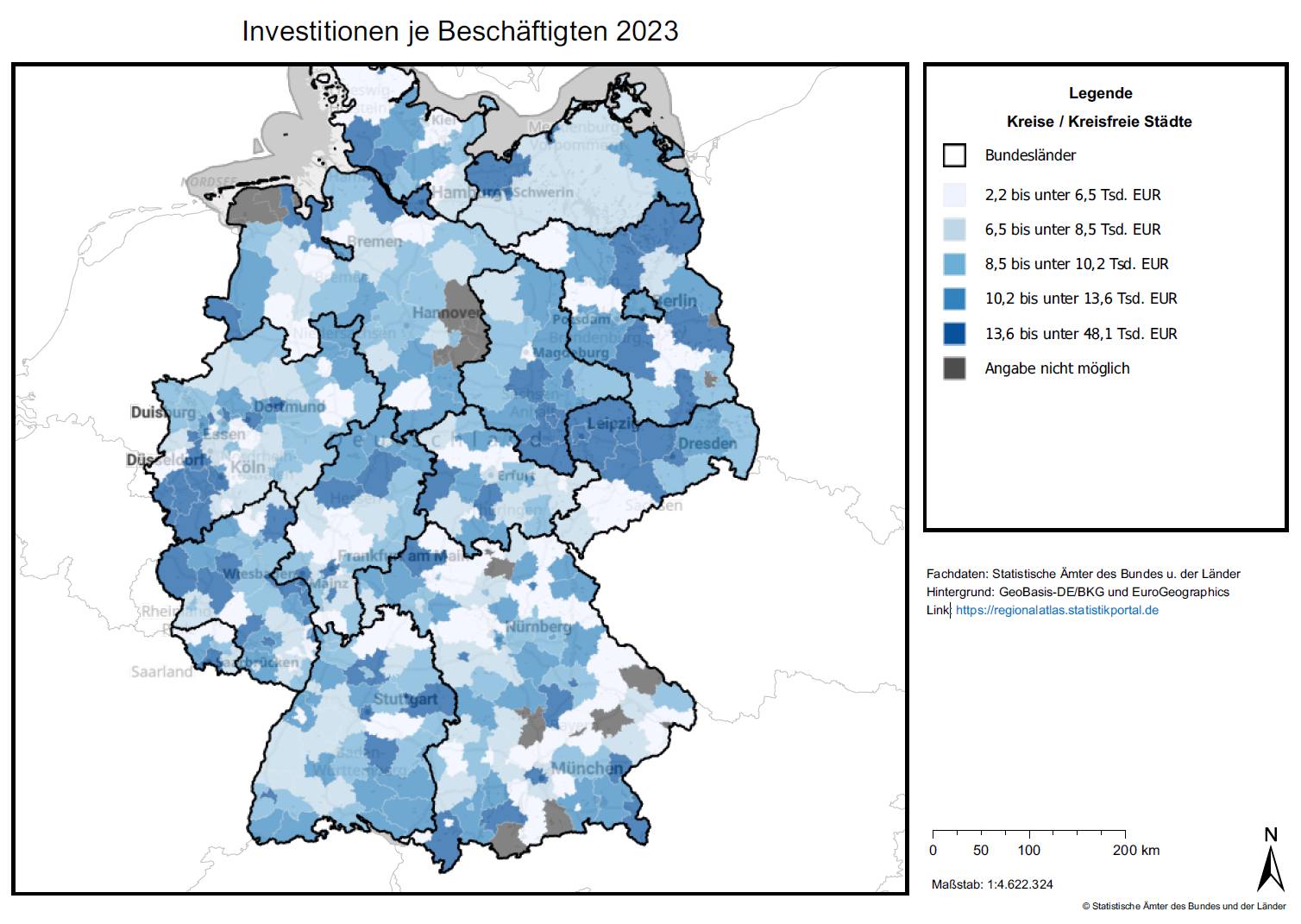
It is also important to account for the fact that Germany’s industrial regions differ significantly in their investment strength, as illustrated by the Regional Atlas of the Statistical Offices of the Federation and the States. These regional disparities have a major influence on transformation speed and competitiveness.
A prominent example of what becomes possible when target visions are clearly defined is the SALCOS® program of Salzgitter AG. The project demonstrates how consistent planning and long-term strategy can enable even energy-intensive industries to accelerate their transformation substantially.
Beyond such publicly funded lighthouse projects, however, a pressing core question remains: In which direction should German industry develop? And how can it transform while remaining globally competitive? Decarbonising German and European industry while large parts of the world economy continue to rely on fossil fuels creates goal conflicts and significant transition risks.
At this point it becomes clear: Germany faces not only an implementation problem, but above all a strategy problem. The challenges are well understood — yet the vision and overarching strategy for industrial transformation remain largely unresolved. This begins with the question of whether industrial transformation should emerge decentrally, through free competition among industrial regions, or be shaped centrally, through a coordinated industrial policy framework.
Change: Decentralised, centralised — or both?
Industrial transformation is currently unfolding both bottom-up and top-down:
Regions organise their own networks, programmes and projects; companies continue to develop their industrial ecosystems. At the same time, federal funding policy increasingly incorporates central industrial-policy elements — for example in energy, semiconductors or defence.
An organically evolving, region-driven industrial transformation initially appears plausible, as competition and market mechanisms can help avoid misallocation. However, research shows that a purely decentralised bottom-up transformation is too slow and too fragmented to secure global competitiveness.
At the same time, transformation research makes clear that a purely top-down approach creates resistance and risks missing the realities and dynamics of regional developments.
For this reason, on the basis of research insights, a synthesis model is to be preferred: a coordinated polycentric transformation.
This model includes:
- national guardrails
- regional design and implementation
- sectoral coordination
- shared infrastructure planning
- aligned transformation pathways in priority industries
Coordination should not be confused with central planning.
The aim is not to steer sectors or business models from above. Rather, it is about creating the structural conditions that enable markets to function in the first place: reliable energy systems, faster permits, clear regulatory guardrails, functioning infrastructure and aligned cross-regional investment pathways. Without such coordination, fragmentation, delays and underinvestment arise — classic market failures in major transformation processes.
Germany is currently moving towards such coordinated polycentric transformation only partially. As a consequence, key elements of the transformation are proceeding asynchronously:
- investment decisions
- grid expansion and energy infrastructure
- permitting procedures
- differing regional priorities
This asynchrony is not a marginal issue — it is one of the major bottlenecks hindering industrial transformation.
Rethinking: Which sectors will remain competitive in ten years?
Beyond finding the right mix of decentralised and centralised elements, an effective transformation strategy requires grappling openly and objectively with key future questions — such as:
Which sectors in a region will still be competitive ten years from now — and how?
This question, raised in Hanover, should be systematically examined at both national and regional level to develop robust strategic solutions.
Regional innovation workshops could provide a suitable framework. They integrate:
- regional data (e.g. from the Atlas)
- sector-specific perspectives
- infrastructure and energy considerations
- company-specific transformation pathways
- industrial-policy target visions
Such formats not only provide orientation, but also help reduce investment uncertainty and strengthen regional resilience. They are a crucial element in moving from fragmented measures toward coherent transformation strategies.
Conclusion: Germany needs strategy + coordination + implementation
The Hanover conference clearly showed that there is broad awareness in Germany of the challenges involved in industrial transformation. Addressing implementation barriers — such as slow permitting procedures or overly complex regulations — is essential to accelerating transformation and improving investment certainty. Without this, Germany risks falling behind countries that are advancing transformation far more decisively.
Beyond implementation speed, however, a fundamental industrial-policy orchestration problem becomes evident. Without a clear vision of what the industrial landscape of Germany and Europe should look like in 2035, transformation remains reactive and slow.
To shift companies from a reactive to an active transformation mindset, they need reliable data, regulatory clarity, industrial-policy target visions, and a strategic translation for their own business models. National and regional actors therefore face an urgent task: to jointly define a shared vision and a reliable framework for industrial transformation.
Next steps
If you are seeking orientation for the strategic direction of your company, or would like to assess how your region is positioned within the broader transformation context, I would be glad to support you in an initial conversation — offering data-driven insights, clarity and an external strategic perspective that integrates economic, regional and industrial-policy factors.