

When the water level of the Rhine remained exceptionally low for several weeks in the summer of 2022, shipping, industry and logistics came under significant pressure. Production outages, delivery delays and rising transport costs had a tangible impact on companies along value chains. These effects did not result from a single extreme event, but from the interaction of climate-related stressors such as prolonged heat, drought and low water levels. The scale of the economic impact was driven, among other factors, by limited transport alternatives and constrained short-term adjustment capacities in production.
This example illustrates that climate-related risks are increasingly occurring in combination and in cascading patterns, thereby amplifying one another. For regional credit institutions, this raises the question of how to appropriately assess the impact of compound climate risks on their own risk exposure.
Definition of Compound Climate Risks
In scientific and supervisory-oriented literature, compound risks are defined in different ways. A widely accepted definition by the Intergovernmental Panel on Climate Change (IPCC) characterises compound risks as:
“the combination of multiple drivers and/or hazards that contributes to societal and/or environmental risk.”
The Network for Greening the Financial System (NGFS) has adopted this definition and operationalised it in the context of financial stability. According to the NGFS, compound risks refer to constellations in which at least one physical climate shock occurs jointly with additional hazards. These additional hazards may also be climatic in nature, such as heat, drought or heavy rainfall, or may originate from other systems, including macroeconomic, societal, geopolitical or institutional contexts. Key characteristics are the interactions, temporal sequencing and amplification effects between the individual hazards.
Put differently, compound climate risks describe scenarios in which physical climate hazards, when interacting, typically generate significantly stronger impacts than if they occurred in isolation. As a result, they can disproportionately affect borrowers, collateral values, portfolios and, ultimately, the loss-absorbing capacity of credit institutions.
Combination of Physical Climate Risks: Heat, Drought and Flooding
A central and empirically well-documented example of compound climate risks is the interaction of heat, drought and heavy rainfall events. Prolonged periods of heat and drought can dry out and seal soils. Subsequently, heavy rainfall events are more likely to lead to flash floods, erosion and inundation, as water infiltration is reduced. Damage from such compound events often significantly exceeds the impacts of individual extreme events.
A study by the Zurich Climate Resilience Alliance shows that successive or simultaneous heatwave and flood events place particularly severe stress on infrastructure, buildings and urban systems. Damage to transport infrastructure, energy supply and buildings can reinforce one another and significantly delay recovery.
For credit institutions, such compound physical climate risks are relevant because they systematically increase both the probability and severity of losses in specific regions. Repeated or combined events can shorten or eliminate recovery periods between individual extreme events, leading to cumulative stress for borrowers and collateral.
Compound Climate Risks, Insurability and Collateral Values
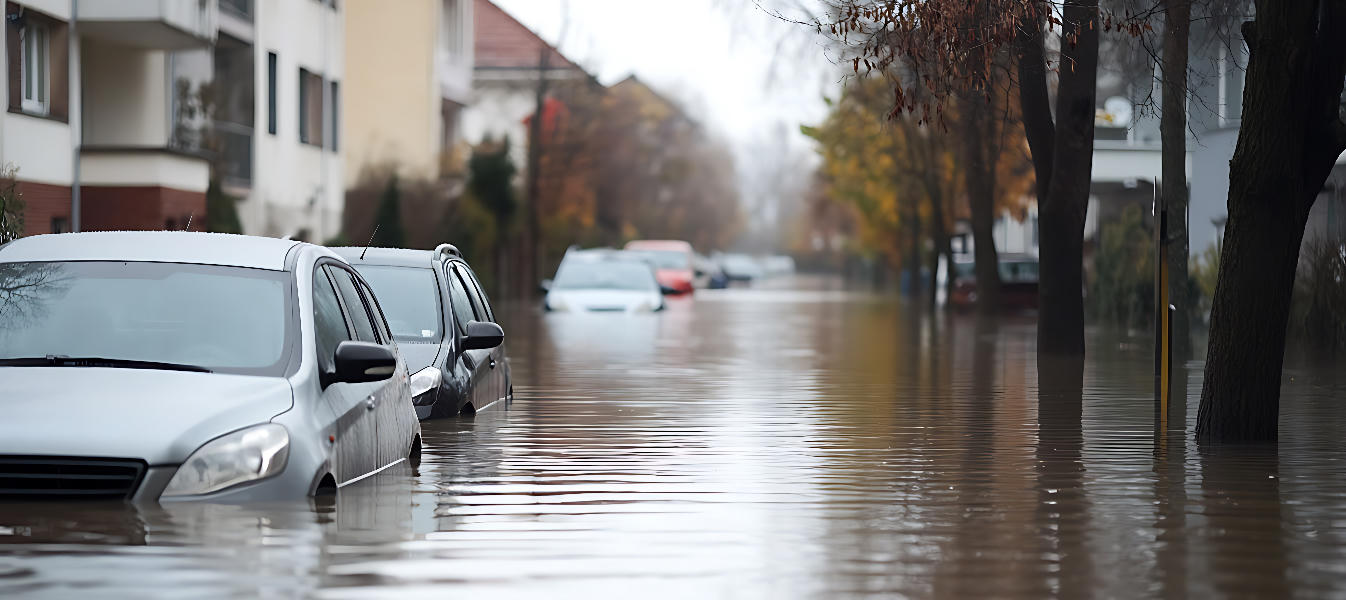
Another practically relevant example concerns the interaction between compound physical climate risks and the insurability of real estate. Recurrent flood events, combined with increasing heat and drought periods, not only raise the physical vulnerability of buildings but also influence insurers’ long-term risk assessments.
Empirical studies show that rising climate risks in exposed regions can be associated with higher insurance premiums, increasing deductibles or even the complete withdrawal of insurance coverage. These developments, in turn, affect property prices, market liquidity and loan-to-value ratios.
For credit institutions, this creates a compound effect arising from multiple physical climate risks and their economic consequences: recurring damage, reduced insurability and declining market values can jointly impair the quality of collateral and the creditworthiness of borrowers, particularly in regionally concentrated portfolios.
Compound Climate Risks in a Macro-Financial Context
The NGFS and recent macroprudential research emphasise that physical climate risks rarely materialise in a stable macroeconomic environment. Instead, they often unfold during periods of heightened economic vulnerability, such as economic downturns, tight financing conditions or geopolitical uncertainty.
A report by the Centre for Economic Transition Expertise (CETEx) at the London School of Economics (LSE) shows that such combinations can lead to disproportionate macroeconomic and financial losses, as physical climate shocks and macro-financial stressors reinforce one another. Losses arise not only from direct damage, but also from feedback loops within the financial system and between the financial sector and the real economy.
Although these analyses primarily focus on the system level, they are also relevant for regional credit institutions. Regional concentration, limited diversification and close interlinkages with the local economy can cause compound climate risks to become material at the individual institution level.
Why Compound Climate Risks Are Relevant for Risk Management
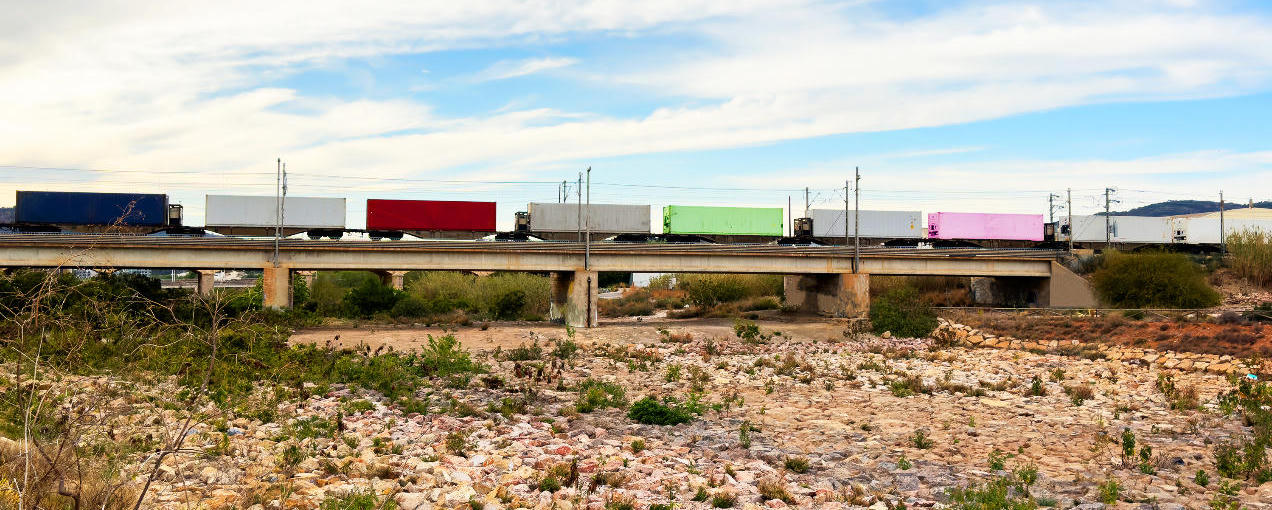
Individual physical climate risks may appear limited when assessed in isolation as part of a risk inventory. In combination—through close temporal sequencing, spatial concentration or the simultaneous occurrence of multiple extreme events—they can, however, generate significantly stronger effects.
Empirical research by Deutsche Bundesbank shows that natural disasters can have measurable impacts on banks’ credit quality and impairment flows, often with time lags and strong regional concentration.
These findings underline that the relevance of climate-related risks for risk management often lies less in individual events than in the combination, sequencing and mutual amplification of multiple stress factors.
Conclusion
Physical climate risks are increasingly occurring in combination and thereby reinforcing one another. For regional credit institutions, a key challenge lies in identifying these compound climate risks at an early stage and realistically integrating them into existing risk management frameworks. Individual risks may have limited effects when viewed in isolation. Their combination, however, can trigger complex transmission mechanisms whose consequences often only become visible over the medium to long term.
A systematic engagement with compound climate risks therefore appears increasingly necessary, particularly with regard to regional characteristics, concentration effects and potential cascading dynamics. This can help sharpen qualitative assessments of risk exposure, even where quantitative modelling remains subject to significant uncertainty.
Next Steps
Credit institutions already consider physical climate risks as part of their risk inventory. A meaningful next step is to explicitly take compound climate risks into account:
- Where do multiple physical climate risks occur jointly or in close temporal succession?
- Which regional portfolio segments are particularly sensitive to such combinations?
- And where might effects intensify over the medium to long term?
If you are interested in an exchange of views on compound climate risks and their implications for regional credit institutions, feel free to send me a short message to arrange a conversation.